

Uganda has officially discharged all eight patients who had been receiving treatment for Sudan virus disease (SVD)—a virus closely related to Ebola virus disease (EVD)—after two consecutive negative test results taken 72 hours apart.
Successful Treatment and Recovery
The recovered patients were treated at designated treatment centers in Kampala and Mbale, and their release marks a significant milestone in Uganda’s ongoing fight against the outbreak.
Meanwhile, health authorities continue to monitor 216 close contacts in quarantine facilities across the country, ensuring early detection and containment of potential new cases.
Uganda’s Coordinated Ebola Response
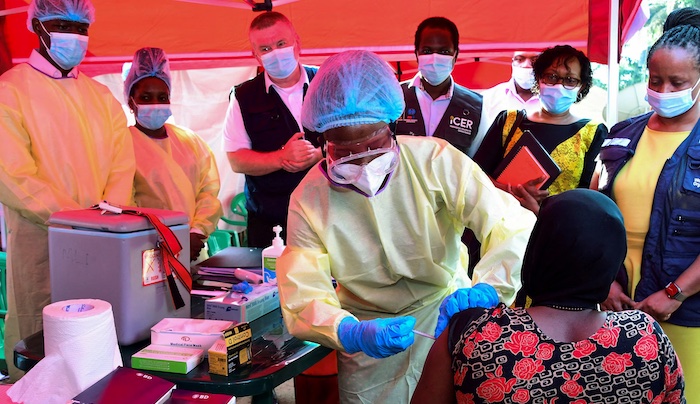
Since declaring an outbreak on January 30, 2025, the Government of Uganda, in partnership with the World Health Organization (WHO) and other stakeholders, has deployed a comprehensive response strategy. This approach focuses on:
- Early detection and clinical care
- Infection prevention and control measures
- Community awareness and engagement
“The patients we are discharging today are completely free of the disease. I urge families and communities to welcome them back without fear,” said Dr. Jane Ruth Aceng Ocero, Uganda’s Minister of Health.
WHO and Global Partners’ Support
As part of its support for Uganda’s Ebola response, WHO has contributed:
- 47 health emergency experts to assist in disease surveillance, case management, and contact tracing.
- 7 tonnes of emergency medical supplies to strengthen treatment and response efforts.
- An 84-bed isolation unit at Mulago National Hospital to enhance patient care.
- Training programs for local health workers in diagnostics, infection control, and outbreak management.
In addition, Uganda’s Ministry of Health, with WHO’s support, launched a groundbreaking vaccination trial shortly after the outbreak’s declaration. Efforts are also underway to advance research into potential therapeutics for Sudan virus disease.
Public Awareness and Ongoing Vigilance
With all confirmed cases now discharged, health authorities are intensifying community engagement to:
- Combat misinformation about the virus.
- Encourage early medical intervention for suspected cases.
- Strengthen infection control measures at healthcare facilities and public spaces.
If no new cases are reported within 42 days, Uganda could officially declare the outbreak over.
Continued Support for Survivors
To ensure a smooth reintegration process, discharged patients, their families, and their communities will receive:
- Psychosocial support from health experts.
- Regular clinical checkups through survivor clinics.
Understanding Sudan Virus Disease
Sudan virus disease (SVD) is a severe and often fatal illness caused by the Orthoebolavirus sudanense, which belongs to the same virus family as Ebola. Past outbreaks have seen case fatality rates ranging from 41% to 100%, with no approved vaccines or treatments currently available.
However, early supportive care has been shown to improve survival rates significantly. The current outbreak in Uganda has a mortality rate of 11.1%, with the only fatal case being the index patient.
As Uganda continues its fight against viral hemorrhagic diseases, global health organizations remain committed to enhancing preparedness, response strategies, and research efforts to mitigate future outbreaks.

