

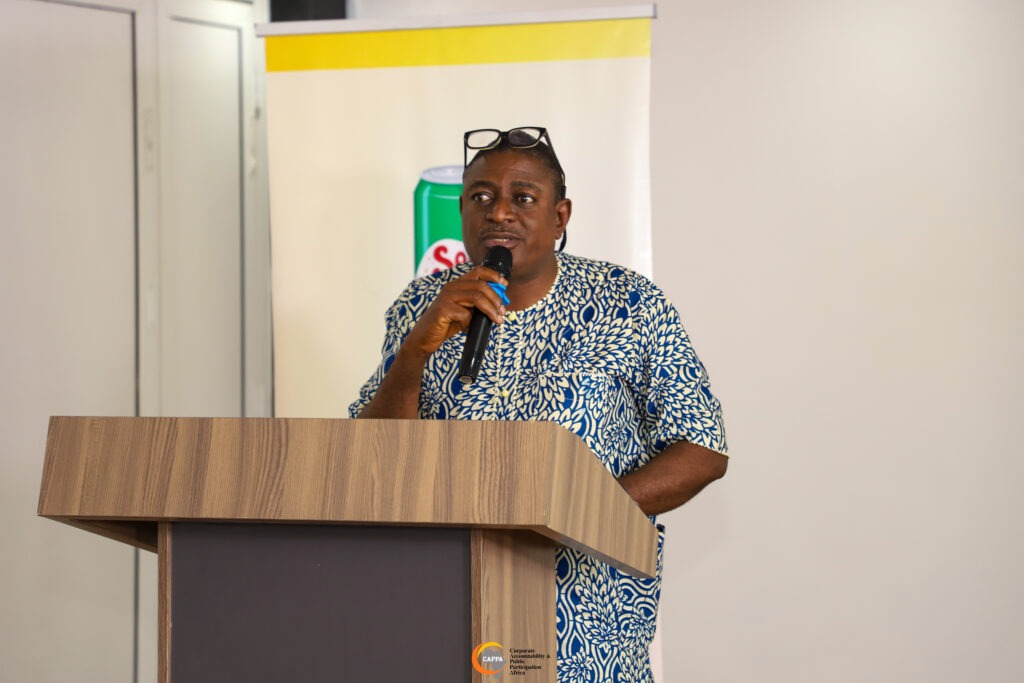
The Corporate Accountability and Public Participation Africa (CAPPA) has warned that Nigeria is losing over N200 billion annually due to the ineffective implementation of its Sugar-Sweetened Beverage (SSB) tax, with grave consequences for public health and the economy.
At a media roundtable in Abuja on Tuesday, CAPPA Executive Director, Akinbode Oluwafemi, said the underperformance of the SSB tax has hindered its potential to curb the rising burden of non-communicable diseases (NCDs) and finance critical health services such as the Basic Healthcare Provision Fund, National Health Insurance Authority, and school feeding programmes.
“Sugar-sweetened beverages are killing us slowly,” Oluwafemi stated. “This is a public health crisis. Our hospitals are overwhelmed, and our streets are turning into graveyards.”
Oluwafemi urged the federal government to increase the current SSB tax from N10 to at least N130 per litre, stressing that the existing rate has done little to deter consumption or influence retail prices. For example, a 33cl bottle of soda currently taxed at just N3.33 sells for over N300—an amount too low to impact consumer behaviour.
He cited the World Health Organization’s recommendation that health taxes should raise prices by 20–50% to meaningfully reduce consumption.
Industry Criticism and Health Implications
Oluwafemi also pushed back against beverage industry claims that the levy is a general “sugar tax,” clarifying that it specifically targets sugar-sweetened drinks—the leading source of added sugar in diets. He expressed concern over the influx of questionable foreign sugary beverages showcased at the 2025 Food and Beverage West Africa Exhibition, calling for stronger regulatory oversight.
To enhance the tax’s effectiveness, CAPPA proposed:
-
Raising the SSB tax to N130/litre
-
Earmarking revenues for health and nutrition initiatives
-
Enforcing mandatory front-of-pack nutrition labelling
-
Annual reporting by relevant tax and regulatory agencies
-
Safeguards against industry interference in health policy
-
Increased investment in agroecology and healthy food alternatives
“Any business model that profits from illness is morally bankrupt,” Oluwafemi declared. “Public health must come before industrial gains.”
Economic Costs of Inaction
Supporting this call, Fidelis Obaniyi, a research associate at the Centre for the Study of the Economics of Africa (CSEA), revealed that Nigeria loses N78.8 billion annually in informal care for people suffering from SSB-related illnesses, with total direct treatment costs reaching N493.3 billion—or 0.36% of the country’s GDP.
“Raising the SSB tax could serve dual purposes—generating revenue and easing the economic burden on households and the healthcare system,” Obaniyi noted.
Rising NCD Burden and Youth Vulnerability
Public health expert Joseph Ekiyor warned of the sharp increase in NCDs such as diabetes, hypertension, obesity, cancer, and cardiovascular disease, fuelled by poor diets and aggressive marketing of unhealthy products, especially to children.
“Children’s food choices are being shaped early by advertising, and these patterns persist into adulthood,” Ekiyor said.
According to WHO data, NCDs now account for 29% of all deaths in Nigeria, and one in five Nigerians faces a 20% risk of dying prematurely—before age 70—from preventable conditions linked to sugar-heavy diets.
Global Best Practices and Industry Resistance
CAPPA’s report, “Junk on Our Plates,” highlights how beverage companies employ manipulative tactics similar to the tobacco industry to promote sugary products—often through misleading health claims and cultural marketing.
In a related publication, the Global Health Advocacy Incubator (GHAI)’s “Sweetened Profits” details how corporations oppose SSB taxes globally through misinformation, lobbying, and economic scare tactics.
Joy Amafah-Isaac, GHAI’s Nigeria Coordinator, said SSB taxes have been successfully implemented in Mexico, South Africa, Peru, and Chile, without any significant negative impact on employment or wages.
“We must reject corporate fear-mongering. It’s time to put people before profits,” she stated.
A Call for Bold Policy Action
Health advocates are calling on the Nigerian government to strengthen the SSB tax, enforce transparent labelling, and invest in preventive health policies. They argue that effective taxation will not only save lives but also bolster the nation’s healthcare infrastructure and economic resilience.
“A stronger SSB tax will ease pressure on our fragile health system and help build a healthier, more equitable Nigeria,” Oluwafemi concluded.

