

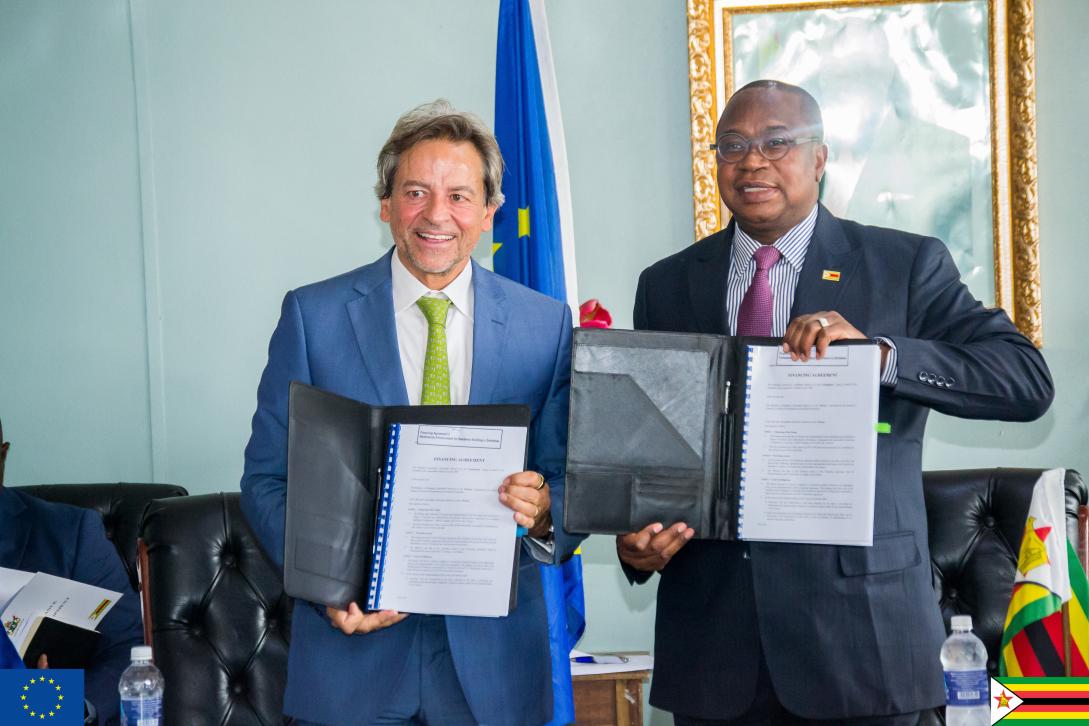
The European Union (EU), in collaboration with the World Health Organization (WHO), has announced a €4.2 million investment to support the establishment of Zimbabwe’s first National Public Health Institute (NPHI). The initiative underscores the EU’s commitment to bolstering health systems across Africa and aligns with the Global Gateway Health Package unveiled at the 6th EU–AU Summit.
Structured as a four-year programme, the project aims to enhance Zimbabwe’s capacity to prevent, detect, and respond to public health threats. Anchored on the Africa CDC Framework, the NPHI will emphasize scientific research, evidence-based policymaking, and health intelligence — moving beyond direct service delivery to foster strategic resilience in the country’s healthcare ecosystem.
Key focus areas for the NPHI include:
-
Formulating a national public health strategy and implementation roadmap
-
Advancing digital health literacy and addressing workforce skill gaps
-
Enhancing surveillance and research on non-communicable diseases such as hypertension and diabetes
-
Deepening Zimbabwe’s engagement in regional and global public health networks
The institute’s development will follow a broad-based, consultative approach, involving the Ministry of Health and Child Care, academic institutions, research bodies, and other stakeholders. It will also draw on the expertise of established African and European public health institutions to inform its structure and governance.
The EU’s funding forms part of the wider Team Europe Initiative on National Public Health Institutes in Sub-Saharan Africa, reinforcing efforts toward achieving Sustainable Development Goal 3: Good Health and Well-being. Once operational, Zimbabwe’s NPHI is poised to become a central pillar for data-driven decision-making and long-term health system sustainability.

