

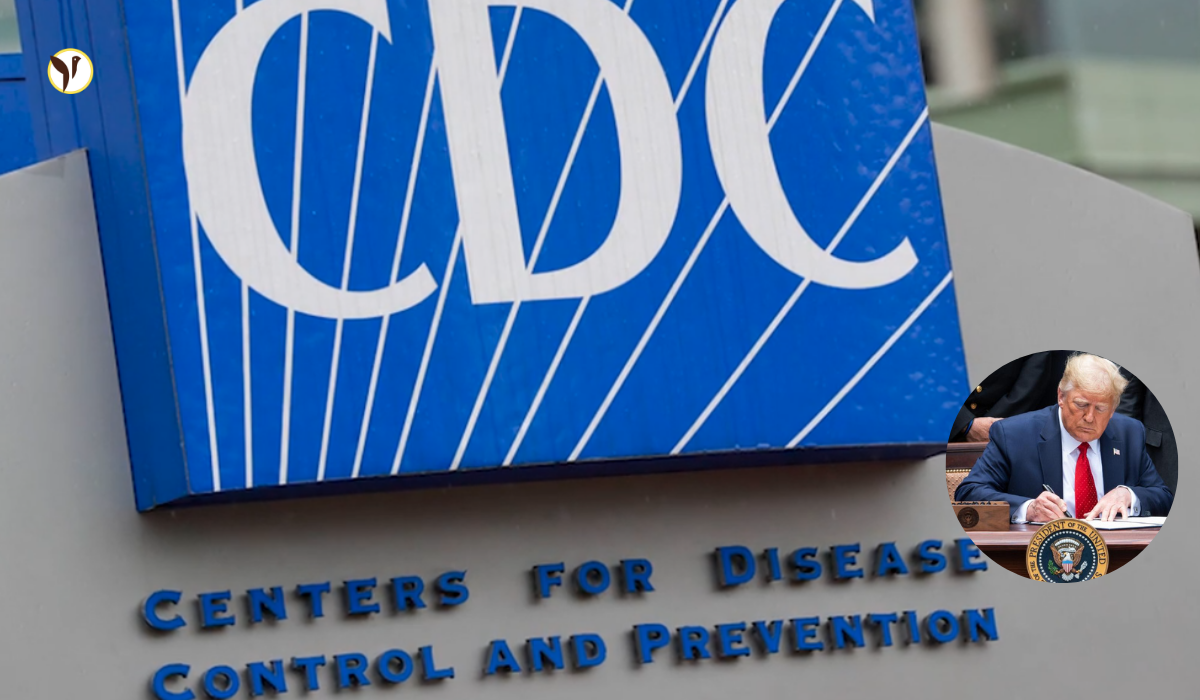
Federal health agencies, including the Centers for Disease Control and Prevention (CDC), have removed several webpages containing HIV statistics and other public health data to comply with recent directives from the Trump administration. The changes, aimed at enforcing a strict binary view of gender, have raised alarms among healthcare professionals and patient advocates.
Among the removed content were pages featuring statistics on HIV among transgender individuals and data highlighting health disparities affecting gay, lesbian, bisexual, and transgender youth. Additionally, a database that tracked behaviors associated with increased health risks in young people was taken offline.
The directive comes in the wake of President Donald Trump’s recent order for the federal government to recognize only male and female sexes and to eliminate diversity, equity, and inclusion programs. On January 29, the Office of Personnel Management issued a memo instructing agencies to complete these changes by January 31. The memo specifically called for the termination of all programs that support what it termed “gender ideology extremism,” including the recognition of self-determined gender identity over biological sex, and mandated the removal of related references from agency websites.
A spokesperson for the Health and Human Services Department, which oversees the CDC, confirmed that the website modifications were being carried out in accordance with this new guidance. “There’s a lot of work going on at the agency to comply,” an unnamed source stated, noting that the CDC is actively removing any content that does not support the executive order.
The CDC’s website alterations have included the deletion of pages that provided comprehensive data on HIV in the United States, as well as detailed breakdowns by demographics such as Hispanic/Latino ethnicity, gender, age, and race. Public health experts have expressed concern that removing this information creates a dangerous gap in the scientific data needed to monitor and respond to disease outbreaks. This concern was echoed in a joint statement by the Infectious Diseases Society of America and the HIV Medicine Association.
Other affected content included a page with information on where individuals could access HIV testing and another offering guidance for healthcare providers on HIV testing and treatment—both of which were confirmed as offline by the Internet Archive. John Peller, head of the AIDS Foundation Chicago, described the situation as “very alarming” and warned that critical health information is becoming inaccessible.
Timothy Jackson, senior director of policy and advocacy at the AIDS Foundation Chicago, mentioned that staff were proactively printing copies of the CDC’s HIV education materials before they disappeared completely from the website.
In addition to the HIV-related data, the CDC also removed the Youth Risk Behavior Surveillance System—a key resource that tracks trends in tobacco use, teen pregnancy, unsafe sexual behavior, and other youth health issues.
At the National Institutes of Health (NIH), dissent over the new orders surfaced this week when Nate Brought, director of the NIH executive office, circulated an email to acting NIH Director Matthew Memoli and other senior officials. Brought argued that the Trump administration’s directives were at odds with decades of NIH research on sexuality and gender. He warned that complying with these orders would undermine the contributions of transgender and intersex staff members and citizens, and could lead to severe mental health consequences for tens of thousands of Americans.

