

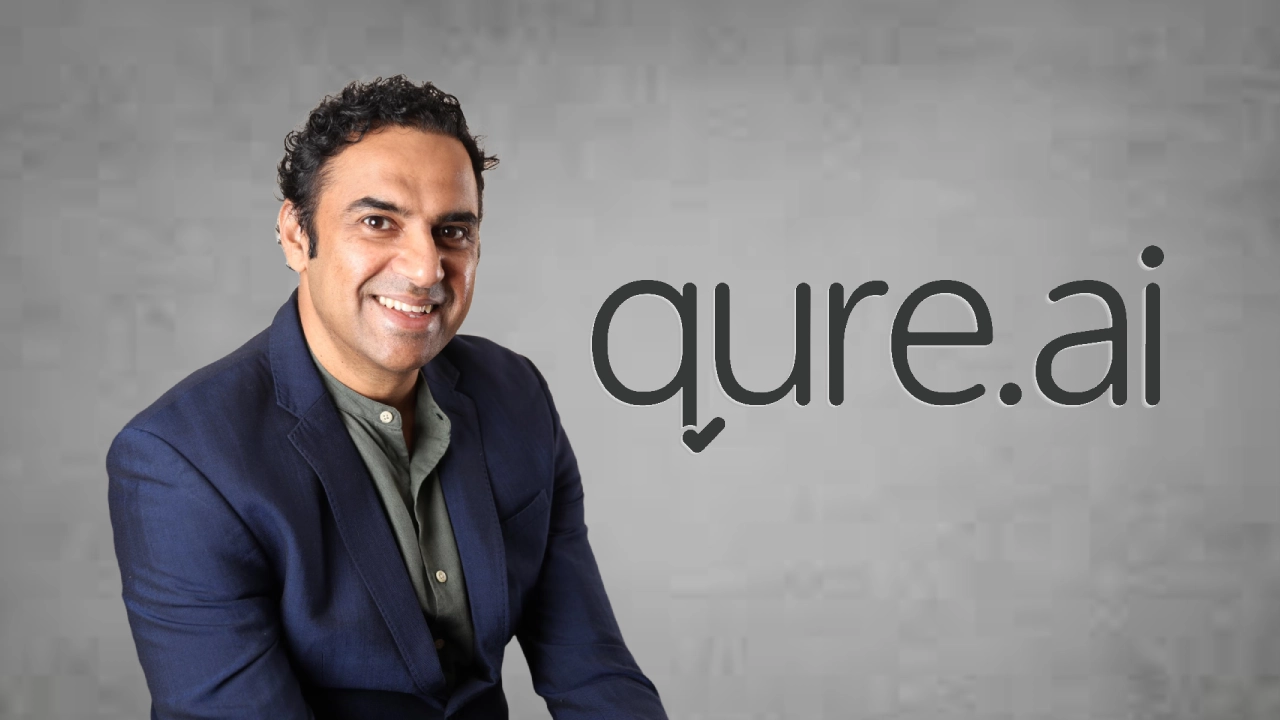
Qure.AI, a leading India-based healthtech startup specialising in artificial intelligence solutions for medical diagnostics, has outlined plans to become profitable by the next financial year and is targeting a public listing within two years, according to CEO Prashant Warier.
Founded in 2016, Qure.AI has emerged as a key player in the AI-driven healthcare ecosystem, offering advanced diagnostic tools for early detection of critical conditions such as tuberculosis, lung cancer, and stroke risk. Backed by major investors including Fractal Analytics, Peak XV Partners, and Novo Holdings—an investment arm of pharmaceutical giant Novo Nordisk—the company has raised $125 million in funding to date.
“We expect to reach break-even and profitability next financial year,” Warier said in an interview. “Once that milestone is reached, we will be in a position to start preparing for an IPO—likely within two to two-and-a-half years.”
While Warier did not disclose the firm’s current valuation, data from market intelligence firm Tracxn pegged it at $264 million as of November 2024.
Qure.AI’s clientele includes global pharmaceutical and medical technology leaders such as AstraZeneca, Medtronic, and Johnson & Johnson MedTech, with applications already transforming clinical workflows in both advanced and emerging markets.
The company currently serves an estimated 15 million patients annually and has been growing at a robust 60–70% revenue rate year-over-year. Warier anticipates this growth could accelerate further over the next five years, driven by increasing adoption of AI technologies in healthcare.
According to industry projections, the global AI healthcare market—valued at $14.92 billion in 2024—is expected to surge to $110 billion by 2030. Analysts note that AI tools are becoming increasingly vital in addressing diagnostic backlogs, improving early disease detection, and reducing clinician workload—particularly in under-resourced settings.
While the United States accounts for 25% of Qure.AI’s revenue, making it the company’s largest market, the firm is also eyeing expansion across low- and middle-income countries, particularly in Latin America and Africa. Warier highlighted strategic partnerships as key to scaling their footprint in these regions.
Interestingly, despite its roots in India, the domestic market accounts for less than 5% of Qure.AI’s revenue. The company sees its biggest growth opportunities in international markets where healthcare infrastructure and diagnostic efficiency are in urgent need of technological support.
As global interest in AI-driven healthcare solutions grows, Qure.AI’s planned IPO could mark a significant milestone in the convergence of technology, public health, and smart investment.

