

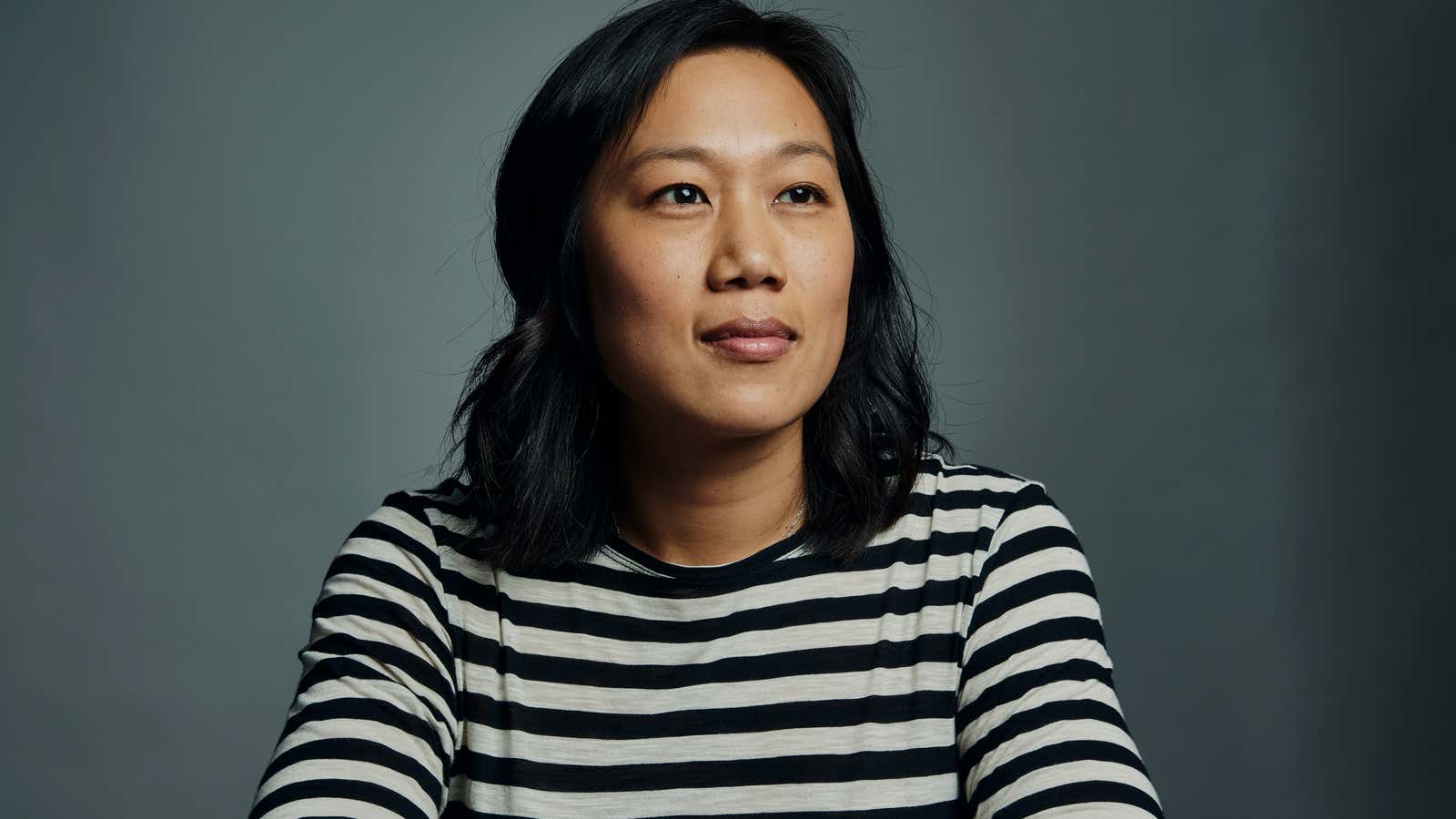
Priscilla Chan, co-founder of the Chan Zuckerberg Initiative (CZI), envisions a future where artificial intelligence (AI) transforms medical research, enabling the early detection and prevention of diseases within the next two decades.
Speaking at SXSW 2025, Chan emphasized how AI-powered “virtual cell” models could shift the medical paradigm from reactive treatment to proactive prevention. “AI can put us in a world where we aren’t just trying to treat disease when it’s out of control. We’re actually preventing it at the earliest stages,” she stated.
The ‘Virtual Cell’ Model: A Game-Changer in Medical Research
The concept of the virtual cell is based on generative AI trained not on text, but on biological data. Instead of processing words, the AI learns from molecular structures, cell interactions, and atomic-level images of organs, simulating human biology at an unprecedented scale.
“What if you showed an AI model three images of the human heart at an atomic level? What if you taught it the molecular code of your cells? You would get a powerful simulation of how the human cell works,” Chan explained during her fireside chat at SXSW 2025 in Austin, Texas.
CZI, funded by Chan and Meta CEO Mark Zuckerberg’s pledge to donate 99% of their Facebook shares, is at the forefront of this innovation. In February, the organization launched the Billion Cells Project, an ambitious initiative to build an AI-powered dataset of one billion cells, leveraging over 1,000 GPUs to train AI models for advanced biological research.
Accelerating Drug Discovery and Personalized Medicine
Chan highlighted how virtual cell models could dramatically reduce the time and cost of drug discovery. The traditional process takes years of trial and error, with billions of dollars in investment. With AI-driven simulations, scientists can computationally test hypotheses before moving to lab experiments, significantly accelerating medical breakthroughs.
“A virtual cell changes that equation,” Chan said. “Instead of testing candidate molecules one by one in the lab, you can model the disease in software. You can test a million potential therapies, identifying the most promising ones faster and at a fraction of the cost.”
Beyond drug development, virtual cells could unlock answers to fundamental biological questions. “What does each gene actually do? How do trillions of cell types emerge from a single fertilized egg? If a virtual cell can help us answer these questions, we’ll be closer to curing and preventing heart disease, neurodegeneration, cancer—maybe all diseases,” she added.
How Virtual Cells Could Transform Healthcare
Chan outlined three major ways in which virtual cell models could reshape the future of medicine:
- Personalized Medicine: Instead of using limited sample sizes to generalize treatments, physicians could leverage virtual cell models to predict individual disease susceptibility and treatment responses.
- Faster Drug Discovery: By simulating diseases and screening millions of potential therapies in AI models, the process of identifying effective drugs could be significantly accelerated, making treatments for rare diseases more accessible.
- Enhanced Disease Detection: Inspired by large language models, virtual cells could detect early signs of diseases such as cancer, identifying potential tumors before symptoms appear, when treatment is most effective.
While the journey toward fully integrating virtual cell technology into medical research is still in its early stages, Chan’s vision underscores the immense potential AI holds for transforming healthcare. With continued advancements, AI-driven biological models could pave the way for a future where disease prevention becomes the norm rather than the exception.

